Corporate Wellness Programs in India have moved past the era of annual health check-ups and a gym reimbursement buried in the CTC breakdown. Organizations that treated corporate wellness programs as a checkbox are now investing in it as a business strategy, and the numbers are starting to reflect that shift.
If you are an HR leader trying to figure out where to focus your energy and your budget this year, here is a look at the trends that are actually reshaping employee wellness programs across India in 2026.
Hybrid Work Has Made Wellness Harder and More Important at the Same Time
The hybrid model is now the default for a large chunk of the Indian workforce. While employees have welcomed the flexibility, HR teams are dealing with a side effect that nobody fully anticipated: the erosion of organic social connection at work. A corporate wellness program that lives only in the office simply does not reach the people who need it most.
The organizations doing this well are ones that have moved their wellness initiatives onto platforms that work regardless of employee locations. Shared challenges, community feeds, and leaderboards that remote and in-office employees can participate in are no longer a nice-to-have. They are the baseline.
Gamification Is Moving from Gimmick to Growth Driver
A few years ago, leaderboards and badges in an employee wellness app felt a little forced. Today, the data tells a different story. Gamification, when it is designed thoughtfully, drives sustained participation in ways that traditional wellness interventions simply cannot match.
The reason is straightforward human psychology. People respond to progress they can see, competition that feels fair, and recognition that is immediate. For instance, a corporate step challenge, for instance, is not just about getting employees to walk more. It creates a shared experience, surfaces friendly rivalry, and gives people a reason to open the app every single day.
What organizations are discovering in 2026 is that gamification is the bridge between a wellness program that gets launched and one that actually gets used. Platforms that combine challenges with points, rewards, and community features are consistently outperforming those that offer passive content alone. The engagement gap between the two approaches is not small.
Mental Health Has Finally Moved to the Centre of the Conversation
For years, mental wellness at the workplace was treated as a slightly awkward category sitting next to “real” wellness. That perception has changed significantly. Burnout, anxiety, and stress-related absenteeism have become measurable problems with measurable costs, and organizations are starting to treat them accordingly.
What is changing in 2026 is not just the acknowledgment that mental health matters. It is the approach. Companies are replacing one-off webinars and EAP helplines that nobody calls with daily touchpoints: like mood tracking built into wellness apps, guided meditations employees can use on their commute, and community features that reduce isolation.
The shift is from reactive to proactive, and that distinction matters enormously for how you design your corporate wellness program.
Wearables and Integrated Health Tracking Are Going Mainstream
India’s wearable market has grown substantially over the past two years. As a result, this shift is highly relevant for HR teams because most employees now already have access to personal health data on their wrists.
The corporate wellness programs that are gaining traction are the ones that connect seamlessly with the devices employees already use. Rather than asking employees to change their habits just to participate, the best platforms meet them where they are.
Moreover, automatic activity tracking removes the kind of friction that typically kills employee engagement. When employees do not have to manually log their steps, participation rates increase. Consequently, the data HR teams work with becomes more reliable and meaningful.
The ROI Conversation Has Become Unavoidable
The most significant shift in 2026 is that employee wellness is no longer getting a free pass in the budget conversation. Which is why HR leaders need to demonstrate outcomes, not just report on programs launched or sessions attended.
This has pushed the focus toward platforms that offer real analytics: participation rates, health scores, employee engagement trends, and more. Leadership does not care for slide decks full of anecdotes. They need to see a correlation between their wellness investment and a measurable improvement in workforce health or retention.
The demand for accountability is not a threat to wellness programs. It is actually an opportunity for HR leaders who have the right tools to make the case.
Where StepSetGo Fits Into All of This
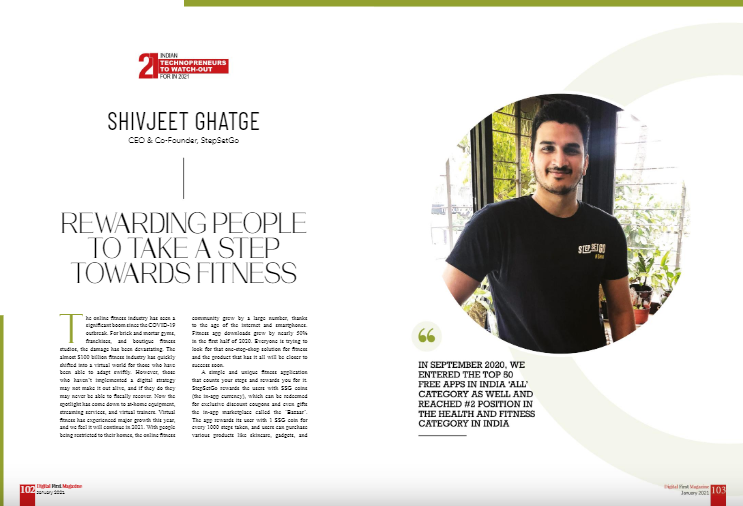
StepSetGo’s corporate wellness platform was built around exactly these shifts. With 100+ clients over 2 years, we have the track record to back the approach.
If you want to see what a corporate wellness program built for these trends looks like, we would love to show you around!
Request a demo and see StepSetGo in action.