The conversation around employee wellness in Indian corporates has changed a lot. And yet, for every organisation that treats workforce health as a priority, three more still see it as a discretionary spend. Something to revisit when the budget loosens up. That calculation has a cost. And it compounds quietly until it doesn’t.
What Inaction Actually Costs
The financial case for employee wellness starts with data that rarely makes it into board presentations.
India loses an estimated $14 billion annually to stress-related productivity decline, according to the World Health Organisation. That figure doesn’t include healthcare claims, attrition costs, or the slower drain of a workforce that is present but mentally checked out.
Burnout is the accelerant. A 2023 Deloitte survey found that 83% of Indian respondents felt burned out at work. Burnout doesn’t just affect the individual. It spreads outward, increasing errors, reducing collaboration, and pulling down entire teams. By the time it shows up in attrition data, the damage has been building for months.
Replacing a mid-level employee in India costs between 50% and 200% of their annual salary. Factor in recruitment, onboarding, and the productivity dip that follows every departure. For an organisation of 1,000 employees with 15% attrition, that runs into crores. And a meaningful share of that attrition is wellness-driven.
The Presenteeism Problem Nobody Talks About
Absenteeism is easy to measure. An employee doesn’t show up, the absence gets logged, and the cost is visible. Presenteeism hides in plain sight.
The average Indian office worker loses two to four productive hours per day to employee wellness health-related reasons. Chronic fatigue, back pain, unmanaged stress, poor nutrition. They’re at their desks. They’re on the calls. But the output tells a different story.
Employees dealing with unmanaged health conditions deliver 30 to 40% lower productivity than their healthy counterparts. In knowledge-work environments, that gap is even wider.
For large organisations like Vedanta, Maruti Suzuki, and Tata, the effect of presenteeism across thousands of employees is not a rounding error. It’s a structural drag on output. And no performance management system can fix it, because performance management addresses behaviour, not biology.
Healthcare Claims Are Rising, and Fast
India’s corporate healthcare costs grow at roughly 14% per year. That’s well above inflation and salary growth. The primary drivers are lifestyle diseases: type 2 diabetes, hypertension, cardiovascular conditions, and musculoskeletal disorders. All of them are closely linked to sedentary work, poor nutrition, and chronic stress.
These conditions don’t develop overnight. They build over years of inactivity and unmanaged stress, in workplaces that never made space for healthier choices. By the time they show up in healthcare claims, the organisation has already paid for them many times over in lost productivity. The claim is just the invoice.
A structured employee wellness program shifts the risk curve for the entire workforce over time. It’s why organisations like HDFC Ergo and Tata AIG, both in the business of calculating health risk, have invested in wellness programs for their own employees.
Disengagement: The Invisible Tax
India’s engagement numbers are sobering. Gallup’s most recent State of the Global Workplace report puts India’s employee engagement rate at around 32%. That means roughly two thirds of the workforce is either not engaged or actively disengaged. Actively disengaged employees cost their organisations an estimated 18% of their annual salary in lost productivity.
The link between employee wellness and engagement is not incidental. Employees in organisations that invest in their wellbeing report higher psychological safety and stronger commitment to the organisation. The inverse is equally true.
Employees who feel their health is entirely their own problem develop a transactional relationship with their employer. That relationship resists almost every engagement initiative you layer on top of it. No town hall or recognition program fully compensates for an organisation that doesn’t appear to care whether its people are well.
The Cost of Delay Is Greater Than the Cost of a Program
This is the argument that lands hardest with leadership. A well-designed employee wellness program, built around structured corporate wellness challenges and daily movement habits, costs a fraction of what inaction costs.
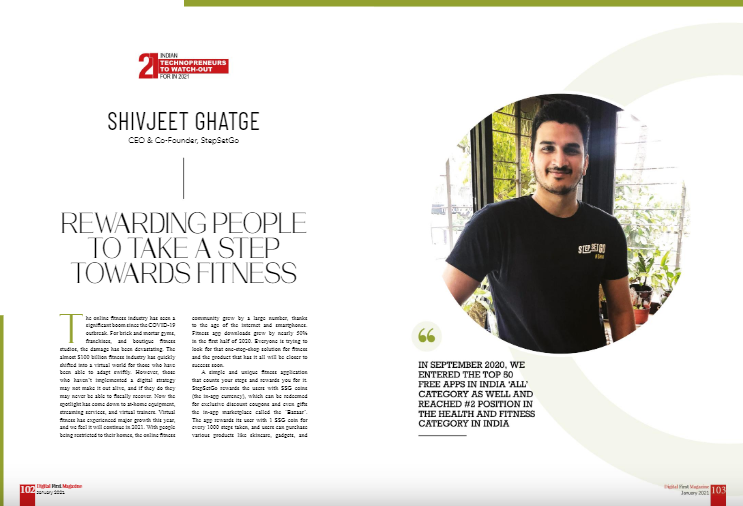
StepSetGo delivers a 28% average health uplift across 11 million members, with 30 million rewards distributed to keep the habit loop running. Organisations like Deloitte, Kotak, L&T, and Lodha didn’t wait for the right quarter to invest. They recognised that the longer a wellness gap goes unaddressed, the more expensive it becomes to close.
A step challenge that runs for 30 days costs far less than a single burnout-driven departure. A corporate wellness challenge that builds social bonds across teams costs less than a disengagement survey confirming what you already suspected. The ROI on employee wellness is not aspirational. It’s arithmetic.
The Urgency Is Now
Every month without a structured employee wellness program is a month of presenteeism, rising healthcare risk, quiet attrition, and cultural erosion that didn’t have to happen.
The question for HR and leadership teams isn’t whether they can afford to invest. It’s whether they can afford not to. The cost of a program is visible and bounded. The cost of ignoring employee wellness is invisible, cumulative, and growing. That is not a favourable trade.
Start Before the Cost Gets Louder
If your organisation still treats employee wellness as a future priority, the numbers in this piece are your business case. StepSetGo makes it simple to launch structured, engagement-driven wellness programs, from a single step challenge to a full-year corporate wellness initiative, without adding complexity to your HR workload.
Book a demo and see how SSG can help you act now →